Pergamon (Bergama)
Medicine was practised here 2,000 years before the modern clinic.
The Asklepion of Pergamon was one of the great healing centres of the ancient world — and the city where Galen, the physician whose ideas shaped medicine for the next fourteen centuries, was born and trained.
A hospital before hospitals
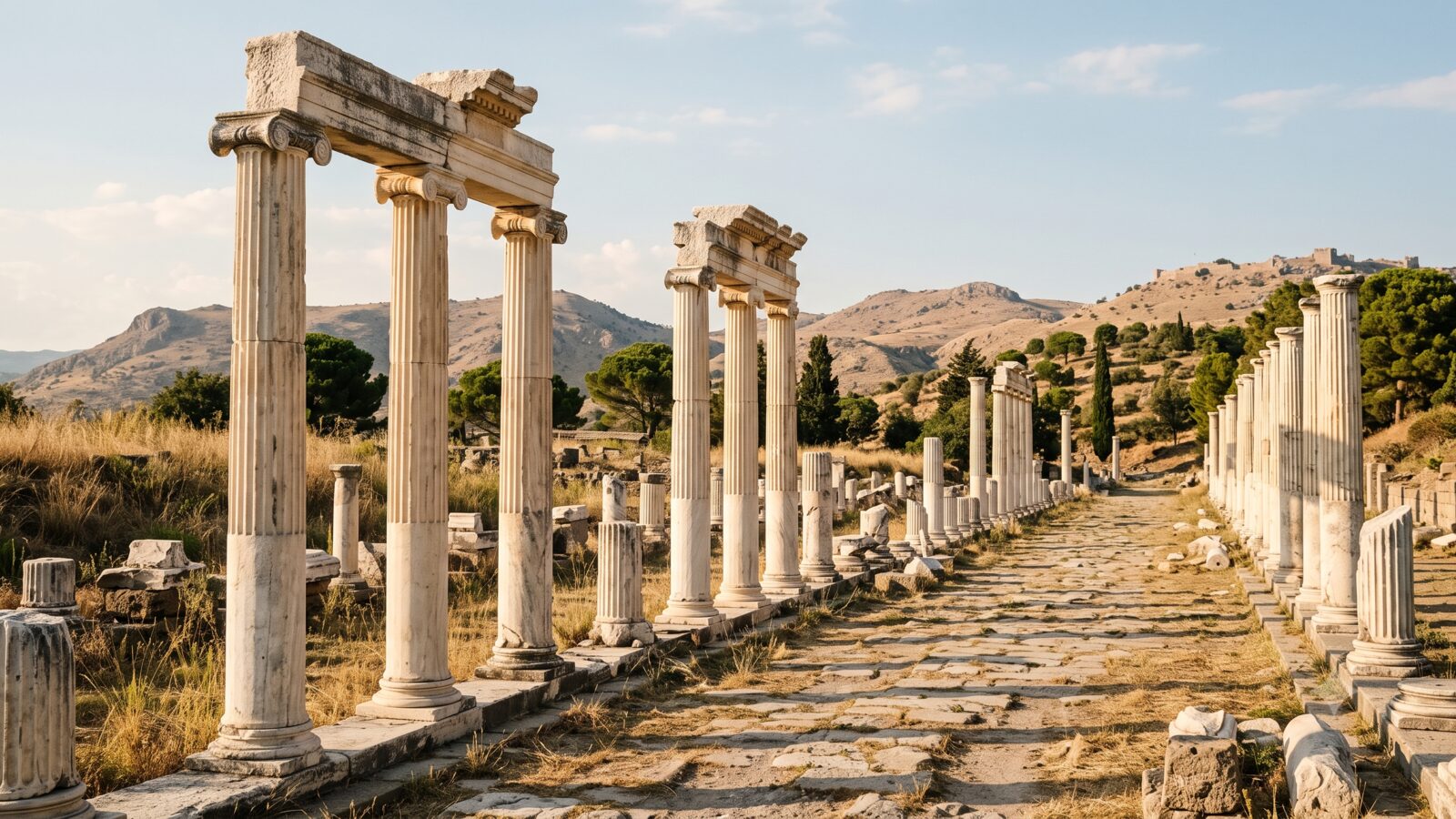
The Asklepion — a sanctuary dedicated to Asclepius, the god of healing — took shape from the 4th century BC and reached its height under Roman rule in the 2nd century AD. Treatment was not one thing but many at once: sleep therapy in the incubation chambers, thermal spring water, mud baths, prescribed diet and exercise, and performances in the site's own theatre. A covered sacred way led patients down to the sleeping rooms. Much of what a modern clinic calls holistic care was already being practised here.
Galen of Pergamon
Galen was born in Pergamon around 129 AD and began his career as physician to the city's gladiators — a post that gave him an unusually direct education in wounds and anatomy. He later moved to Rome and served the imperial court. His writings on anatomy, physiology and pharmacology remained the standard medical reference across Europe and the Islamic world until the 16th century.
Getting there
Pergamon and its Multi-Layered Cultural Landscape entered the UNESCO World Heritage List in 2014. Besides the Asklepion, the acropolis holds the steepest surviving theatre of the ancient world, cut into the hillside. Bergama is about 105 km north of Izmir — under two hours by road.