
Hierapolis–Pamukkale
A Greco-Roman spa city built beside white terraces made by thermal water.
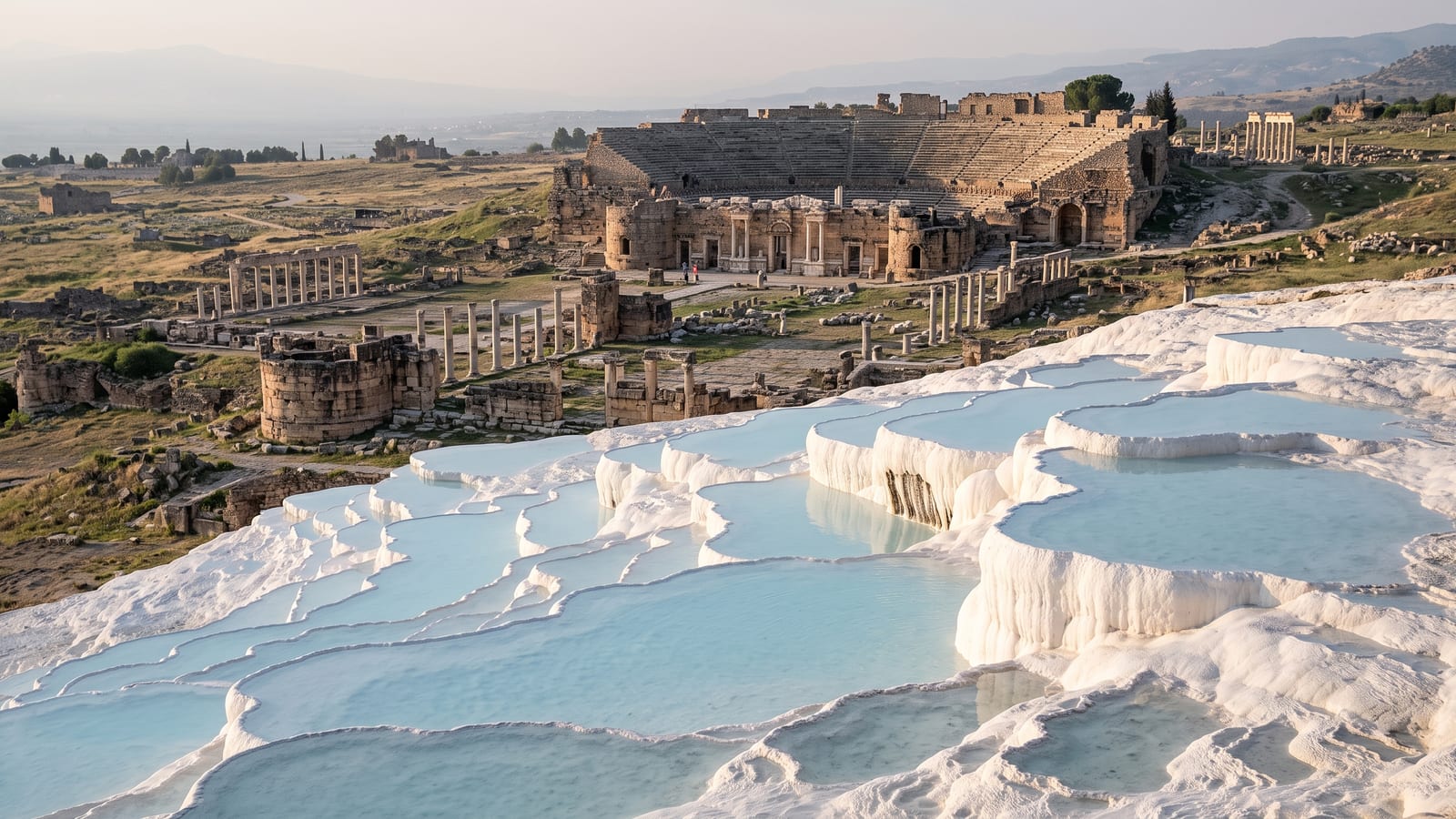
At Pamukkale, calcium-rich hot springs created white travertine terraces while Hierapolis grew beside them as a spa and sacred city. Nature and archaeology were inscribed together by UNESCO in 1988.
Water made the landscape
Hot water loses carbon dioxide as it flows over the slope, leaving calcium carbonate behind. Layer after layer produced petrified cascades and shallow terrace pools. The bright surface is still forming and is fragile, so visitors must follow the marked barefoot routes and protected-area rules.
The city beside the springs
Hierapolis was founded in the Hellenistic period and rebuilt as a Roman city after major earthquakes. Its theatre, long necropolis, baths, gates and the Martyrium of St Philip explain why people came for health, worship and burial. The scale is easy to underestimate: allow time for both the ruins and the travertines.
Plan for a full archaeological walk
Hierapolis and the travertines form one large landscape, not two small attractions: the necropolis alone extends for more than two kilometres, while the theatre and St Philip's monuments sit away from the white terraces. Routes cross ancient paving, slopes and designated barefoot sections where the wet calcite can feel unfamiliar underfoot. Choose priorities before entering if stamina is limited, and combine the ruins with Pamukkale itself rather than scheduling another distant site on the same short visit.