Cappadocia (Fairy Chimneys)
A landscape people carved into homes, churches and cities underground.
Volcanic ash hardened into soft rock; wind and water shaped it into the cones known as fairy chimneys. Then people carved into them — dwellings, monasteries and entire cities below the surface.
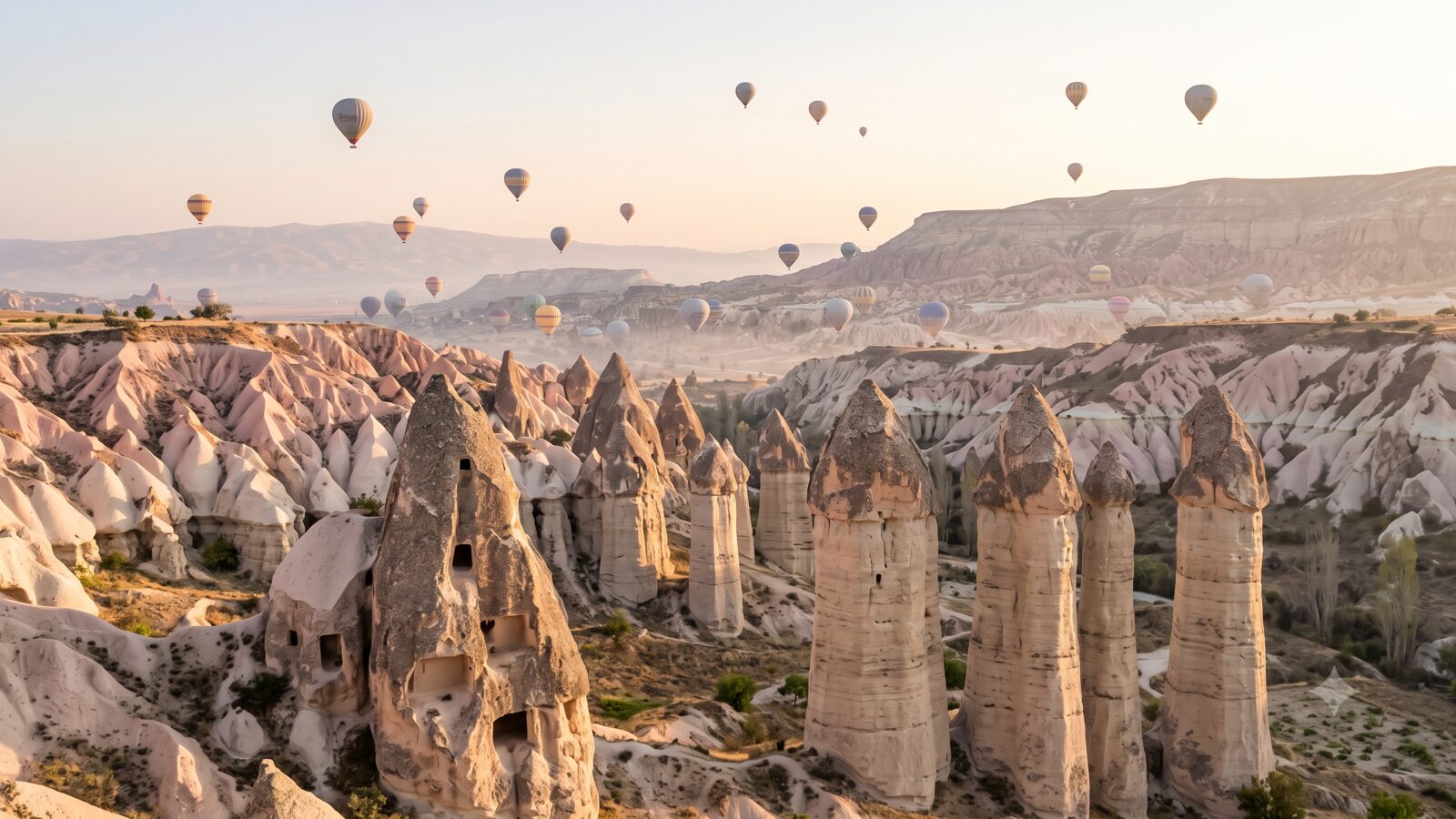
How the fairy chimneys formed
Eruptions from Erciyes and Hasandağı laid down deep beds of volcanic tuff across the region. Tuff is soft enough to cut with hand tools but hard enough to hold a roof. Where a harder basalt cap protected the column beneath it, erosion left the tapering cones now called peribacaları — fairy chimneys.
Rock churches and underground cities
The rock-cut churches of Göreme carry Byzantine frescoes painted between the 10th and 12th centuries, still bright in places. Derinkuyu and Kaymaklı are not caves but planned settlements — ventilation shafts, wells, stables, chapels and rolling stone doors, on level after level, capable of sheltering thousands. Göreme National Park and the Rock Sites of Cappadocia entered the UNESCO World Heritage List in 1985.
Getting there
Kayseri and Nevşehir both have airports, about an hour and twenty minutes from Istanbul by air. The hot-air balloon flights leave at first light, weather permitting.