
Ankara Castle
Ankara's long history is built into the stones of its hilltop citadel.
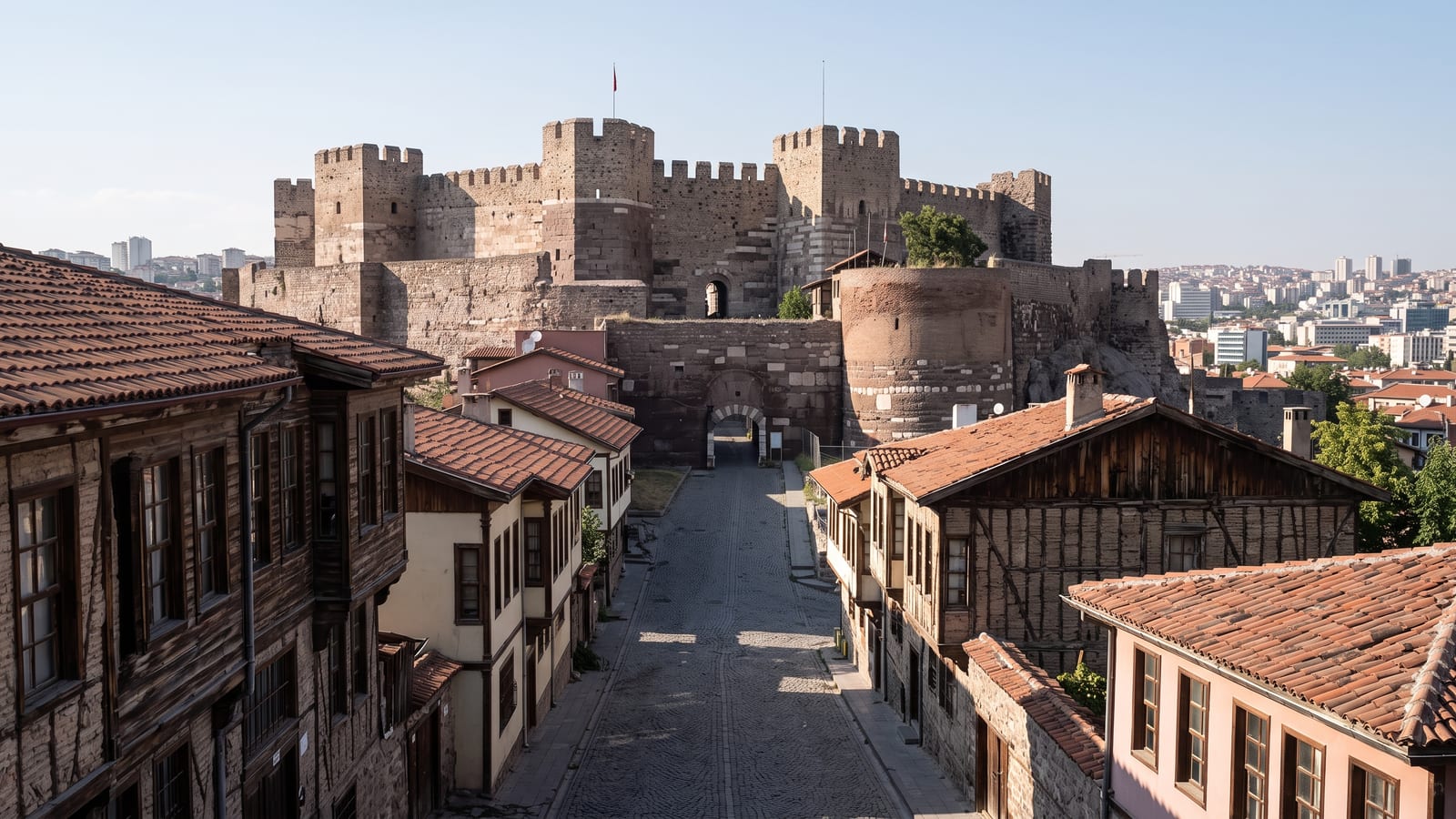
Ankara Castle encloses the summit above Ulus with inner and outer walls. Roman repairs, Byzantine defences, Seljuk inscriptions and Ottoman houses show how each period reused the same strategic hill.
A fort with no single birthday
The first construction date is unknown. A fort already existed when the Galatians settled Ankara; the Romans repaired it, Byzantine builders strengthened the inner walls, and the Seljuks expanded it after taking the region. Reused stone in the walls makes the citadel a physical archive of the city.
Inside the walls
The inner castle has more than forty towers and two principal gates. Traditional Ankara houses survive within the walls, some adapted as cafés, shops and restaurants. The steep streets open to broad views across modern Ankara, linking the citadel naturally with the Museum of Anatolian Civilizations below.
Build an uphill Ulus circuit
The practical route rises from Ulus through the Museum of Anatolian Civilizations toward the castle gates, then continues on sloping lanes within the walls. Cobblestones, steps and uneven historic surfaces make this a more demanding city walk than the map suggests. Pair the museum and citadel in one uphill circuit; visitors conserving energy can use road transport to the upper neighbourhood and walk a shorter section around the gates and viewpoints.