Troy
Nine archaeological layers beneath the city of Homer's Iliad.
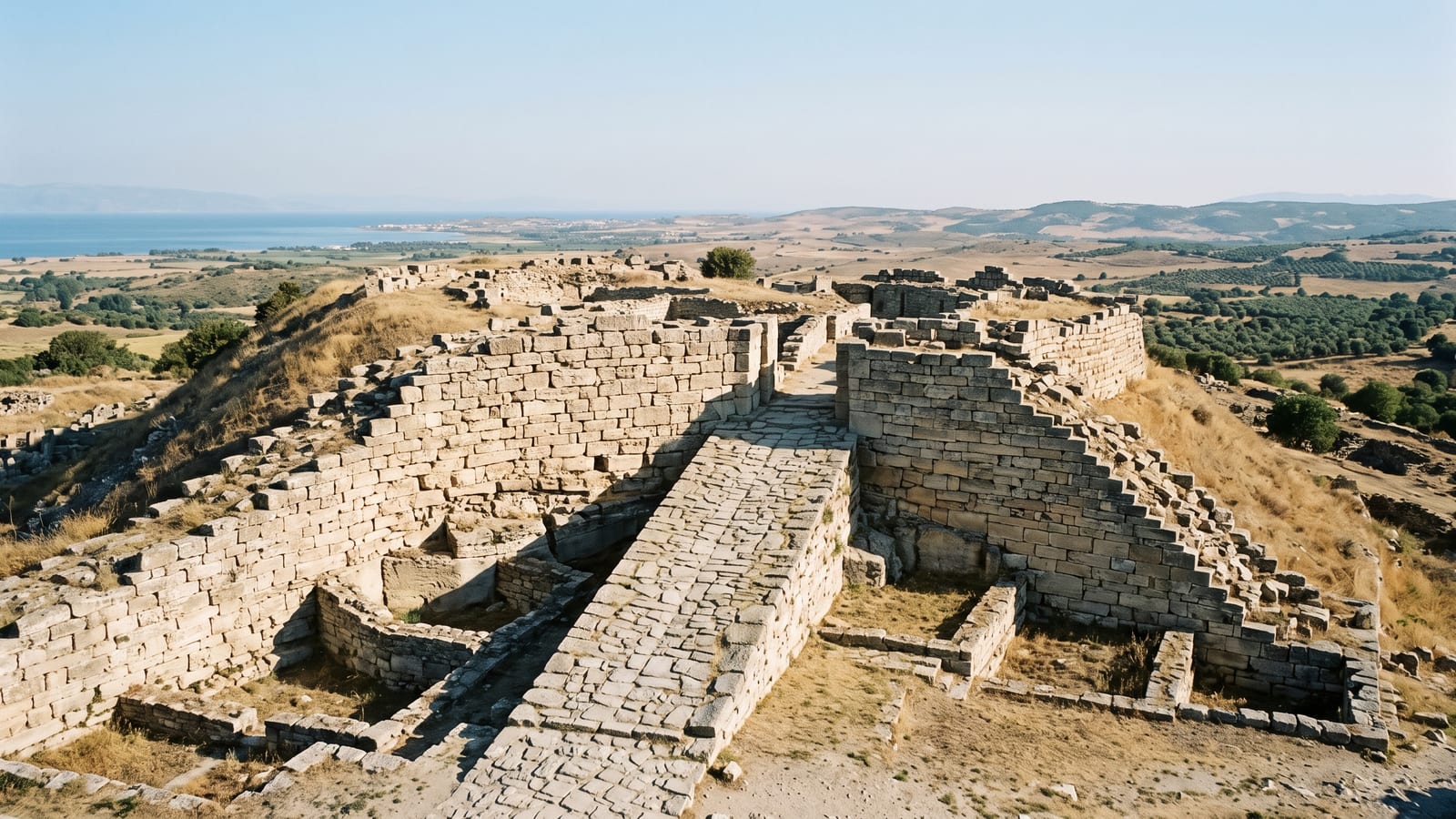
Troy is both an archaeological mound occupied for millennia and the setting that shaped the Iliad. Its walls, gates and foundations reveal nine broad cultural layers from the Early Bronze Age to the Roman city of Ilion.
Cities built over cities
Excavation identified nine principal settlement layers beginning around 3000 BC. Massive walls from Troy VI and VII are often associated with the world behind the Homeric story, while the theatre, baths and council buildings belong to later Hellenistic and Roman phases. The visible site is a cross-section through time, not one frozen city.
Read the mound with the museum
Troy entered the UNESCO World Heritage List in 1998. The archaeological site lies near Tevfikiye, about 30 km from central Çanakkale, and the nearby Troy Museum gives the fragments essential context. Seeing both helps separate the excavated city, the history of archaeology and the later legend.
Use one transfer for museum and mound
Troy lies by Tevfikiye outside central Çanakkale, and the museum and archaeological mound belong in the same dedicated trip. The mound is read along an outdoor path across exposed, uneven remains; many layers are foundations rather than standing buildings, so the museum makes the walk much easier to interpret. Visitors limiting walking can prioritise the museum's ramped displays and selected viewpoints at the site instead of trying to cover every excavation edge.