
Ancient City of Side
Roman streets and temples reach the edge of the Mediterranean.
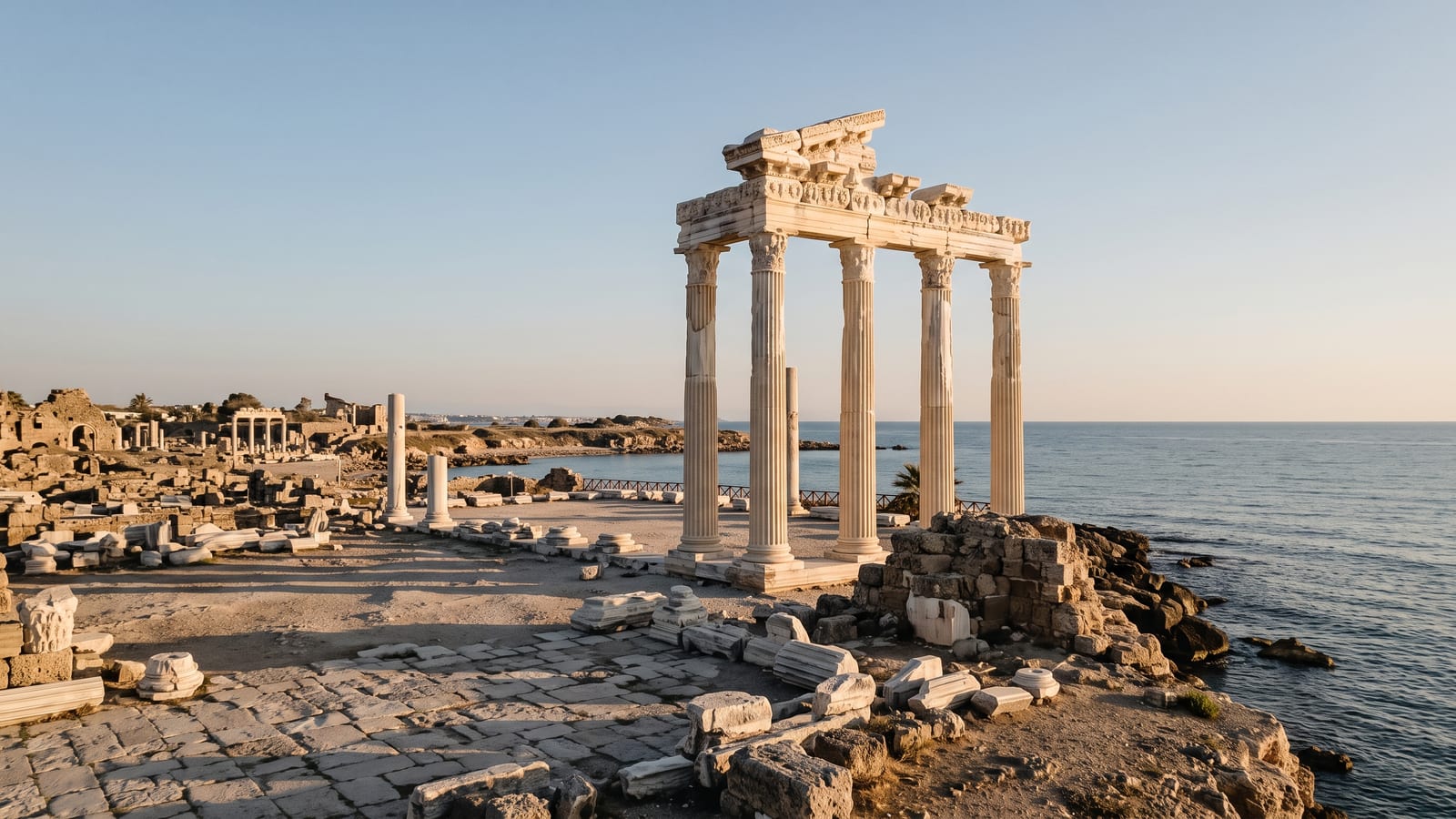
Side occupies a small peninsula south of Manavgat. Once Pamphylia's leading port, it preserves a Roman theatre, colonnaded streets, baths and the Temple of Apollo beside the ancient harbour.
A port city on a peninsula
Side became a settlement by the 7th century BC and later passed through Lydian, Persian, Hellenistic and Roman rule. Its two main colonnaded streets ran from the monumental gate toward the civic centre and harbour, revealing how trade and public life were organised around the peninsula.
Theatre and Temple of Apollo
The 2nd-century theatre is unusual because part of its seating rests on arches and vaults rather than a natural hillside. Near the water, the columns of the Temple of Apollo frame the horizon. The archaeological remains blend into modern Side, so allow time to walk rather than treating it as a single fenced monument.
Follow the peninsula as one walking route
Side's remains stretch through the modern settlement rather than sitting inside one compact enclosure. A logical route runs from the monumental gate and theatre along the colonnaded axis toward the museum, harbour and Temple of Apollo. Expect a mix of ordinary pedestrian streets and rough stone around the ruins; visitors conserving energy can choose one end of the peninsula instead of repeatedly crossing it.