Agora of Smyrna
A Roman civic centre survives between Kemeraltı and Kadifekale.
The Agora of Smyrna was the administrative, commercial and religious centre of ancient Smyrna. Most visible remains date from the 2nd century AD, when the complex was rebuilt after a destructive earthquake.
The city beneath the city
Ancient Smyrna followed a grid plan between the bay and Mount Pagos, today's Kadifekale. The agora occupied a central terrace with a broad courtyard, colonnades and multi-storey galleries. Its location inside modern Konak makes the change from living bazaar streets to archaeology especially immediate.
Arches, water and inscriptions
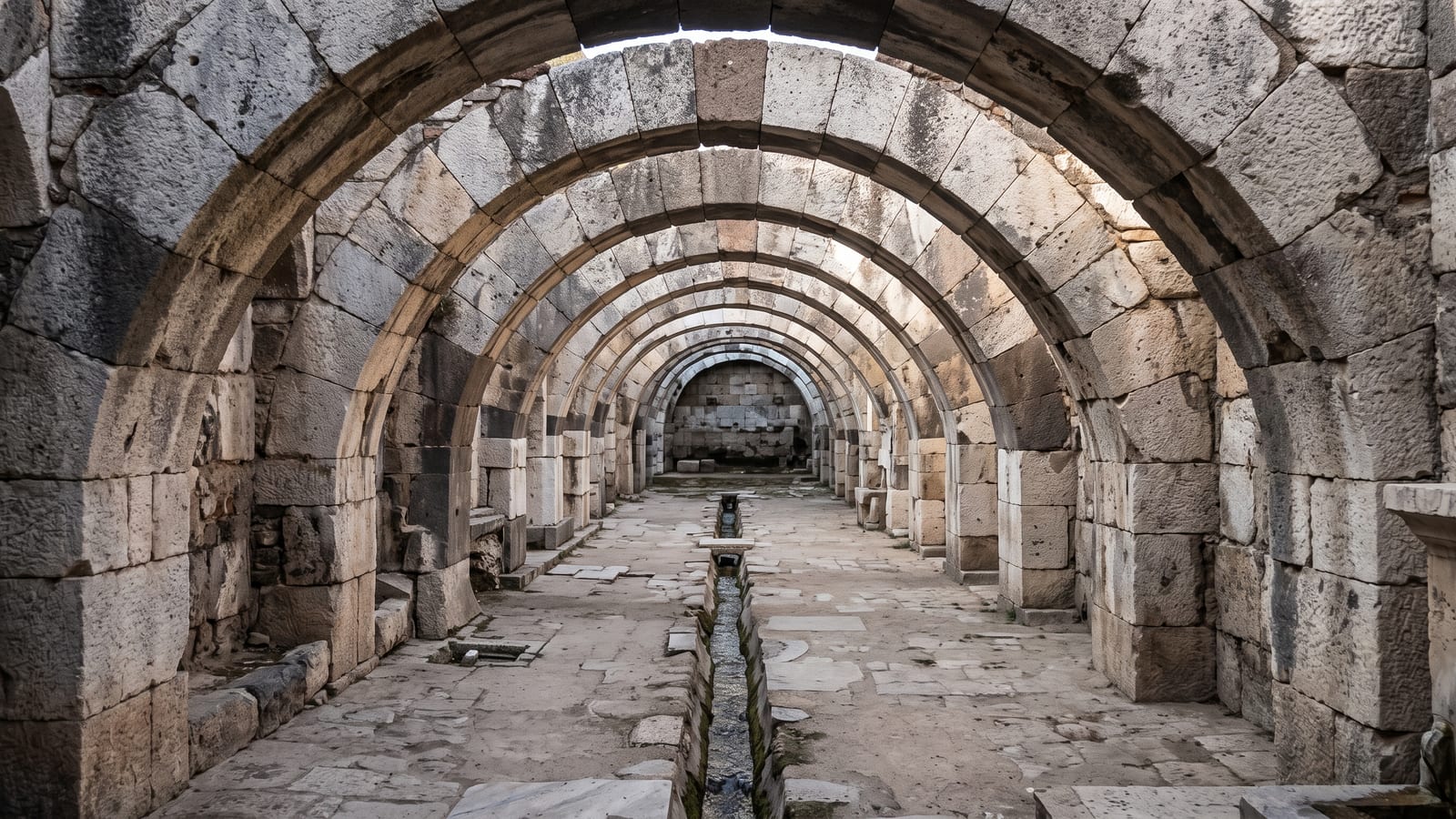
The vaulted basement galleries are among the site's best-preserved spaces, and water still runs through ancient channels. Inscriptions record people who helped Smyrna after the earthquake of AD 178. Together they turn the agora from a set of columns into evidence of how the city recovered and governed itself.
Use it as the archaeological pause in Konak
The agora sits inside Konak between Kemeraltı and Kadifekale, so it works best as part of a central Izmir day rather than a separate out-of-town excursion. The courtyard and basement galleries are contained, but ancient paving, stairs and changes of level still matter for mobility. Combine it on foot with the bazaar streets; treat Kadifekale higher on the slope as an additional leg, not as part of the same flat walk.