Aphrodisias
A Roman city whose nearby marble made its sculptors famous across the empire.
Aphrodisias grew around the sanctuary of Aphrodite in the Morsynus valley. Abundant local marble supported an exceptional school of sculpture and left civic buildings, reliefs and inscriptions in remarkable condition.
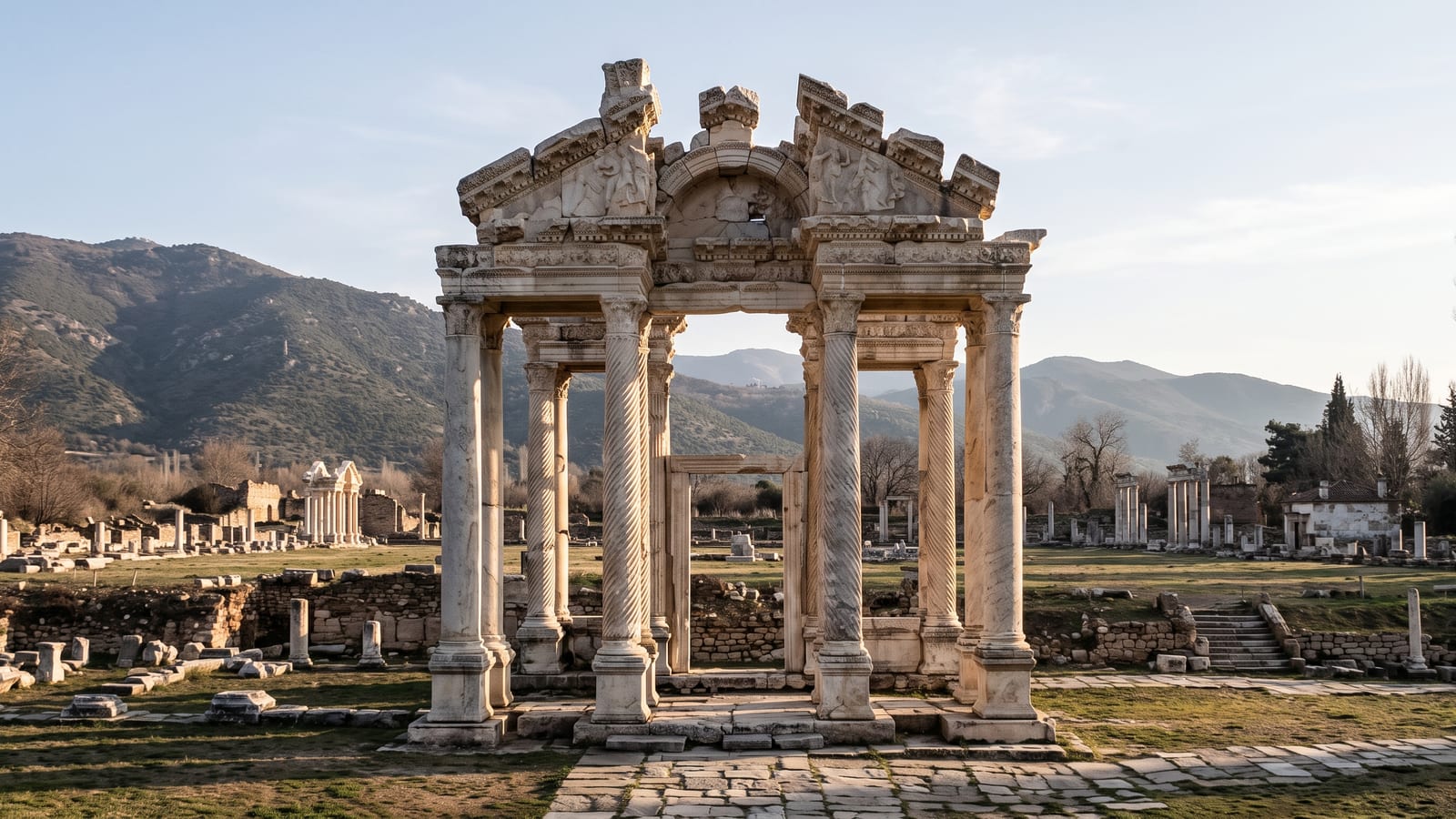
A city made by marble
Quarries only a few kilometres away supplied high-quality stone. Between the 1st and 5th centuries AD, Aphrodisian sculptors sent signed work across the Roman world. The on-site museum and the reliefs of the Sebasteion make that workshop tradition unusually easy to see.
Streets, stadium and sanctuary
The Temple of Aphrodite, theatre, agora, Tetrapylon and one of the ancient world's best-preserved stadiums can be read as parts of one planned city. Aphrodisias and its ancient marble quarries entered the UNESCO World Heritage List in 2017.
Give the remote site a long loop
Aphrodisias is at Geyre near Karacasu, roughly between the Aydın and Denizli approaches rather than on the coastal clinic corridor. The archaeological city covers about seventy hectares, and the stadium sits at the edge of a broad open-air circuit; the on-site museum is part of the same visit. Plan a dedicated road excursion with substantial walking over exposed ancient ground, or choose the museum, Sebasteion and central monuments if distance and heat make the full loop impractical.